An older roof does not automatically need to be replaced. Age is an important consideration, but it is only one part of the assessment. Some roofs continue to perform reliably with suitable maintenance and occasional localised repairs, while others develop widespread defects that make further patching less effective.
The correct decision depends on the condition of the complete roofing system, including the covering, fixings, underlay, battens, flashing and supporting structure. A professional inspection can distinguish normal ageing from deterioration that is affecting the roof’s ability to protect the property.
How to Decide Whether an Old Roof Needs Repair or Replacement
The most appropriate solution should be based on the extent and cause of the defects rather than the roof’s age alone. Its maintenance history, construction and exposure to the weather will all influence its present condition.
When an Older Roof May Still Be Repairable
Repair may remain a sensible option when the damage is clearly confined to one area and the surrounding materials are still sound. Examples include a small number of slipped tiles, an isolated flashing defect or localised mortar deterioration.
A repair is more likely to provide a reliable result when:
- The roofline remains straight and stable
- Most tiles or slates are secure and serviceable
- The underlay is performing adequately
- Moisture has not caused widespread deterioration
- The source of any leak can be identified
- Previous repairs remain sound
- The supporting structure is in good condition
In these circumstances, carefully targeted work may restore weather resistance without disturbing unaffected parts of the roof.
Age Does Not Tell the Whole Story
Roofs of a similar age can be in very different condition. The quality of the original installation, type of covering, exposure to wind and rain, ventilation and maintenance history all affect performance.
A roof may look heavily weathered from ground level but still have a sound structure. Conversely, a relatively tidy-looking covering may conceal worn underlay, corroded fixings or moisture beneath the surface.
For this reason, appearance and age should not be used as the only basis for recommending replacement.
Repeated Leaks Need Proper Investigation
An old roof that has leaked more than once does not necessarily need replacing, particularly if each incident can be traced to a specific defect. However, leaks appearing in different places may show that several components are deteriorating together.
Water can travel beneath tiles, along underlay and across roof timbers before becoming visible inside the property. The internal damp patch may therefore be some distance from the entry point.
An effective inspection should trace the route of moisture and examine the surrounding roof rather than concentrating only on the visible symptom.
When Local Repairs Become Less Effective
Further repairs may provide limited value when deterioration is widespread. Replacing one failed component will not restore dependable performance if adjoining materials are also approaching failure.
Signs that a broader roofing solution may be required include:
- Numerous loose, cracked or porous tiles
- Several unrelated areas of water ingress
- Widespread underlay deterioration
- Repeated faults around ridges, valleys or junctions
- A sagging or distorted roofline
- Decay affecting battens or structural timbers
- Repairs failing because surrounding materials are fragile
- New problems developing shortly after earlier work
These symptoms suggest that the roof should be assessed as a complete system.
The Importance of the Underlying Materials
Tiles and slates form the visible outer covering, but they are not the only parts responsible for keeping a roof weather-resistant. Battens support the covering, fixings hold it in place, and underlay provides a secondary barrier against moisture.
If these concealed materials remain serviceable, local repairs may be entirely appropriate. If they have deteriorated across large areas, repairing only the visible covering may not address the underlying weakness.
Inspecting the roof space can provide useful evidence, including dampness, daylight through gaps, damaged underlay and staining on timbers.
What About an Uneven or Sagging Roof?
A roofline that has developed visible dips or distortion should be inspected professionally. The cause may involve weakened battens, movement within the supporting structure or prolonged moisture exposure.
Surface repairs will not correct structural movement. The source and extent of the distortion must be established before deciding whether reinforcement, partial renewal or complete replacement is appropriate.
Can Part of an Old Roof Be Renewed?
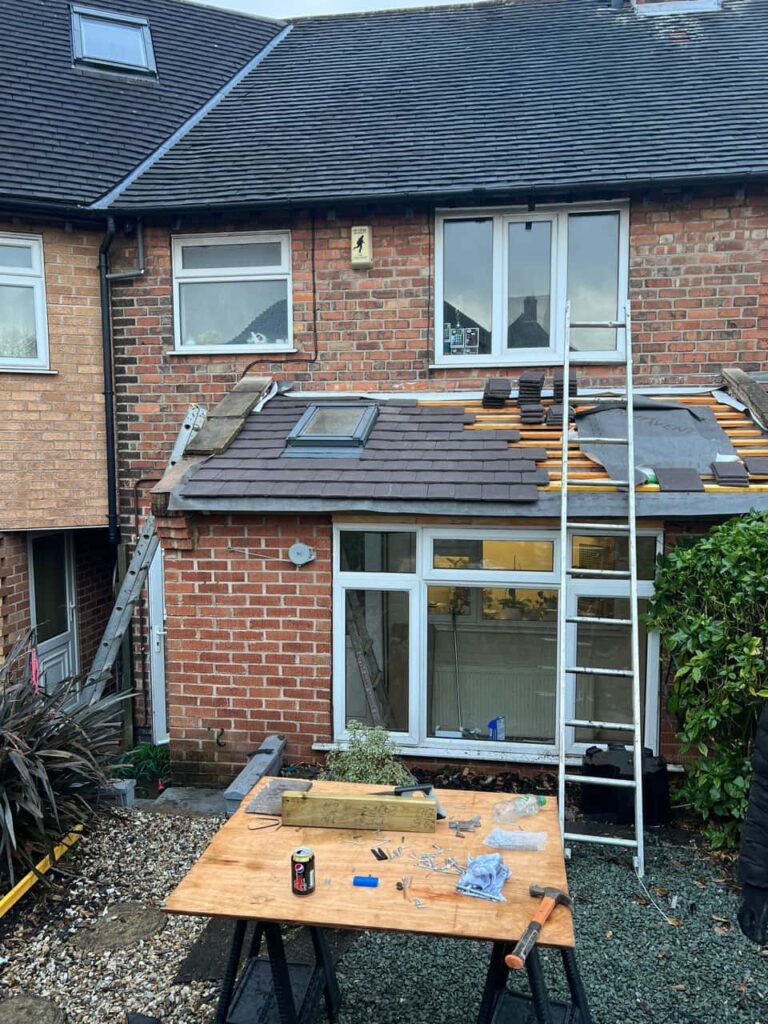
Where deterioration is limited to one slope or section, partial renewal may sometimes be possible. This depends on whether the retained areas are sound and whether the new work can be integrated effectively with the existing roof.
The junction between old and renewed materials must be properly formed so that water continues to drain correctly. Partial work should not be used simply to avoid addressing defects that extend throughout the roof.
What a Professional Roof Assessment Should Cover
A useful inspection should consider:
- The condition and security of tiles or slates
- The reliability of flashing, valleys and ridge details
- Evidence of leaks inside the roof space
- The state of the underlay, battens and fixings
- The alignment of the roof structure
- The quality and condition of previous repairs
- Whether faults are isolated or widespread
- The roof’s overall ability to shed rainwater
This whole-roof approach provides a clearer basis for deciding whether repair or replacement is the more appropriate option.
Avoiding Replacement Before It Is Necessary
Replacing an old roof solely because of its age can overlook the possibility that a focused repair may restore reliable performance. Equally, continuing with isolated repairs when the entire system is deteriorating can leave the property exposed to recurring faults.
The aim should be to choose work that matches the roof’s actual condition. A clear diagnosis helps avoid both unnecessary replacement and repeated short-term repairs.
Conclusion
An old roof does not always need replacing. If its structure and underlying materials remain sound and defects are localised, professional repairs may extend its serviceable life. Replacement becomes more appropriate when damage is widespread, different components are failing together or previous repairs no longer provide lasting results.
Kirkby in Ashfield Roofing Repairs provides professional roof inspections and repairs in Kirkby in Ashfield, Nottinghamshire. If you are unsure whether your ageing roof can still be repaired, contact the team to arrange an assessment and receive clear guidance on the most suitable next step.
Call us on: 01623 700 893
Click here to find out more about Kirkby in Ashfield Roofing Repairs
Click here to complete our contact form and see how we can help with your roofing needs.