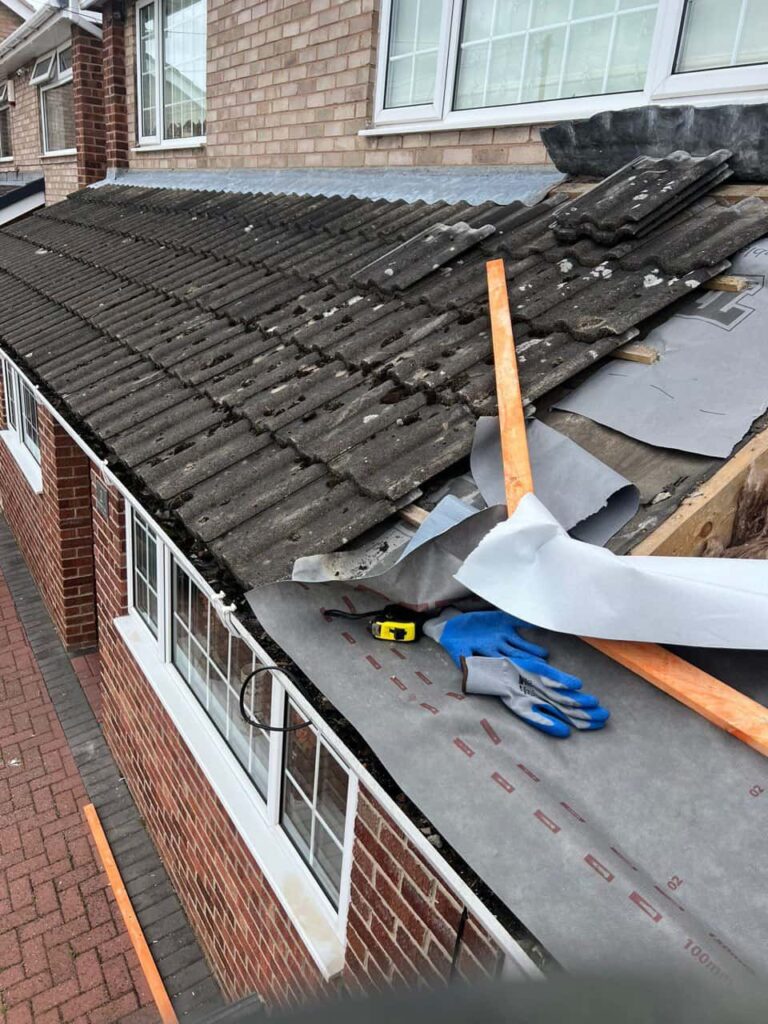
When a roof develops a problem, one of the most important questions is whether the affected area can be repaired successfully or whether deterioration has progressed far enough for replacement to become the more appropriate solution. A single damaged tile presents a very different situation from widespread deterioration affecting several roof sections at the same time.
For homeowners in Kirkby in Ashfield, Nottinghamshire, the extent and distribution of roof damage provide valuable information when making this decision. Professional assessment should consider not only what is visibly damaged but also the condition of surrounding materials, underlying components and other vulnerable roof details. The aim is to preserve serviceable roofing wherever practical while ensuring that repairs are capable of restoring dependable performance.
Why Does the Extent of Roof Damage Matter?
Roof repairs are most effective when the problem has a clearly identifiable cause and is contained within an area where surrounding materials remain sound.
As deterioration spreads, the situation changes. A repair may still be technically possible, but addressing numerous individual defects separately can become less appropriate if the roofing system is deteriorating more generally.
Important factors include:
- How much of the roof is affected
- Whether damage is concentrated or widespread
- The condition of surrounding tiles or slates
- Whether water ingress is confined to one area
- The condition of flashing, ridges, verges and junctions
- Whether underlying materials have been affected
- The number and distribution of previous repairs
- Whether new defects continue appearing elsewhere
It is the overall pattern of deterioration, rather than one symptom alone, that helps determine the appropriate approach.
Localised Damage Often Supports a Repair Approach
A contained defect within an otherwise serviceable roof is frequently suitable for repair.
Examples might include several damaged tiles, a specific flashing problem or deterioration around one roof detail. If neighbouring materials remain secure and the underlying construction is in suitable condition, the affected section can often be addressed without disturbing the rest of the roof.
This is one of the reasons a professional inspection should establish clear boundaries around the damage.
Repairing a genuinely localised problem can restore performance while retaining roofing materials that continue to function correctly.
One Leak Does Not Automatically Mean the Roof Needs Replacing
Water ingress understandably causes concern, but one leak should not automatically be interpreted as widespread roof failure.
A relatively small defect can allow water to enter repeatedly. The source could be a displaced tile, damaged flashing or another localised vulnerability.
Water can also travel after entering the roof, meaning the position of an internal stain does not necessarily identify the external defect.
Tracing the leak to its source and inspecting the surrounding area provides far more useful information than judging the complete roof by the presence of one damp patch.
Several Leaks Change the Assessment
Multiple leaks appearing in unrelated areas can indicate a different level of deterioration.
Each leak may still have a repairable cause, but several vulnerable sections developing at the same time justify looking at the roof as a complete system.
The inspection can establish whether the problems are genuinely independent or whether roofing materials across several sections are reaching a similar stage of deterioration.
This distinction can have a significant influence on whether continued localised repair remains appropriate.
The Distribution of Damage Matters as Much as the Amount
Two roofs could contain a similar number of damaged tiles but require different approaches.
If all of the damage is concentrated within one contained section, repairing that area may be straightforward. If the same number of deteriorated tiles is scattered across every roof slope, the pattern suggests a more general condition.
This is why simply counting visible defects does not provide the complete answer.
Their location, cause and relationship with surrounding roofing materials all need to be considered.
Surrounding Materials Help Determine Whether a Repair Is Sensible
The condition immediately around a defect can reveal whether the problem is isolated.
Suppose one tile has cracked but all neighbouring tiles remain secure and serviceable. That provides a very different repair scenario from finding that the surrounding tiles are also fragile, weathered or beginning to move.
Professional assessment therefore extends beyond the component that first attracted attention.
Where surrounding materials provide a dependable repair zone, localised work can often be completed effectively. Where deterioration continues well beyond the obvious defect, the scope of work may need to increase.
Underlying Damage Can Make a Small Surface Problem More Significant
Visible roof damage does not always reveal the complete extent of deterioration.
A relatively small external opening may have allowed moisture beneath the covering for an extended period. Conversely, an area that looks particularly untidy externally may still have limited underlying deterioration.
The condition beneath and around the affected roofing materials therefore needs consideration.
Repair-or-replace decisions should be based on the complete condition of the affected roof section rather than appearance alone.
Widespread Tile Deterioration Can Reduce the Practicality of Individual Repairs
Replacing one or two damaged tiles within a stable roof covering is very different from dealing with numerous deteriorating tiles spread across a large area.
Where roofing materials have become generally fragile or unstable, working on one component may reveal further weaknesses nearby.
At this stage, continuing to treat each tile as an isolated defect may no longer reflect the actual condition of the roof.
A broader assessment can determine whether sections remain suitable for repair or whether deterioration has become sufficiently extensive to justify more comprehensive renewal.
Ridge and Verge Condition Contributes to the Overall Picture
The main roof covering is not the only factor in the repair-or-replace decision.
Ridge and verge details can also deteriorate. If the tiles remain largely serviceable but one particular detail requires attention, targeted repair may still be entirely appropriate.
However, widespread tile deterioration combined with failing ridge, verge and other roof details presents a different picture.
Several types of deterioration occurring together can indicate that the roof needs to be considered more comprehensively.
Flashing and Junctions Need Separate Assessment
Roof junctions and flashing can develop defects independently of the main roof covering.
This is important because a leaking junction does not necessarily mean the tiles or slates across the entire roof have failed.
Where the defect is confined to one detail, professional repair can often address the affected area while retaining the wider roof.
Replacement becomes more relevant when these localised problems exist alongside extensive deterioration elsewhere.
Previous Repairs Can Reveal How the Roof Is Changing
A history of repairs does not automatically mean that replacement is required.
Several older repairs may remain completely sound and continue performing as intended. What matters is whether new defects are repeatedly developing in previously untouched sections.
If repairs are becoming increasingly frequent and spread across different parts of the roof, this can indicate that the condition of the original materials is changing more generally.
The pattern of previous and current problems can therefore provide useful evidence during assessment.
Repeated Repairs to the Same Area Need Investigation
A roof section that repeatedly develops the same problem deserves more than another identical repair.
Recurring movement or water ingress can indicate that the original cause has not been identified or that deterioration extends beyond the area previously addressed.
In this situation, expanding the investigation does not necessarily mean replacing the entire roof.
It means establishing the true boundaries of the defect so that any subsequent repair addresses the complete problem rather than only its most obvious symptom.
Roof Age Should Not Decide the Outcome by Itself
An older roof is not automatically unsuitable for repair, just as a newer roof is not automatically free from significant defects.
Some established roofing materials remain dependable for many years, while localised problems can occur at almost any stage of a roof’s life.
Condition is more important than age.
The amount of serviceable roofing remaining, the nature of the deterioration and the ability to create a dependable repair should carry more weight in the decision.
When Does Replacement Become More Appropriate?
Replacement becomes increasingly relevant when deterioration is extensive enough that reliable repair areas are difficult to isolate.
This may be the case where numerous roof sections are deteriorating, roofing materials have become widely unstable or several different roof details are failing together.
The important distinction is between a roof containing repairable defects and a roofing system that has become generally deteriorated.
Replacement should therefore follow evidence of widespread condition rather than being recommended simply because one visible problem appears serious.
Partial Replacement May Sometimes Be Appropriate
The choice is not always between repairing a few components and replacing the entire roof.
Where deterioration is extensive within one clearly defined roof section but other areas remain dependable, more substantial work may sometimes be concentrated on the affected section.
The appropriate scope depends on how the roof is constructed and how successfully new and existing areas can work together.
Professional assessment allows the extent of work to reflect the actual distribution of damage rather than forcing every roof problem into an all-or-nothing decision.
Why Repairing Sound Areas Unnecessarily Should Be Avoided
A professional roofing assessment should identify what genuinely requires attention and what remains serviceable.
If substantial sections of the roof continue to perform correctly, there is value in recognising that rather than assuming widespread replacement is necessary.
Equally, retaining heavily deteriorated materials simply to keep the work localised can undermine the effectiveness of a repair.
The objective is to establish a sensible boundary between dependable existing roofing and materials that genuinely require intervention.
Look at the Pattern, Not Just the Most Obvious Damage
Homeowners naturally focus on the most visible defect, such as a missing tile or an internal water stain.
However, the repair-or-replace decision needs a wider perspective.
The number of defects, their location, the condition of adjoining materials and whether deterioration is continuing elsewhere provide a much clearer understanding of roof condition.
This is why a detailed roof assessment is valuable before deciding how extensive the work should be.
Professional Assessment Helps Define the Right Scope of Work
At Kirkby in Ashfield Roofing Repairs, we assess the visible problem together with surrounding roofing materials and related roof details. The purpose is to determine whether damage is genuinely localised or forms part of wider deterioration.
For homeowners in Kirkby in Ashfield, Nottinghamshire, this can provide a clearer basis for deciding whether targeted repairs can restore dependable performance or whether replacement should be considered.
The appropriate solution should match the actual extent of deterioration rather than automatically favouring either repair or replacement.
Conclusion
The extent of roof damage has a major influence on whether repair or replacement is the more suitable approach. Localised defects surrounded by sound roofing materials can often be repaired effectively, while widespread deterioration across multiple areas may make more comprehensive work appropriate.
The distribution of the damage is equally important. Several problems concentrated around one roof detail can present a very different situation from similar defects scattered throughout the complete roof.
If your roof in Kirkby in Ashfield, Nottinghamshire is showing signs of deterioration, Kirkby in Ashfield Roofing Repairs can assess the extent of the problem and determine an appropriate course of action. A professional inspection can help establish which areas remain serviceable, which require repair and whether the overall condition of the roof makes replacement a more suitable solution.
Call us on: 01623 700 893
Click here to find out more about Kirkby in Ashfield Roofing Repairs
Click here to complete our contact form and see how we can help with your roofing needs.